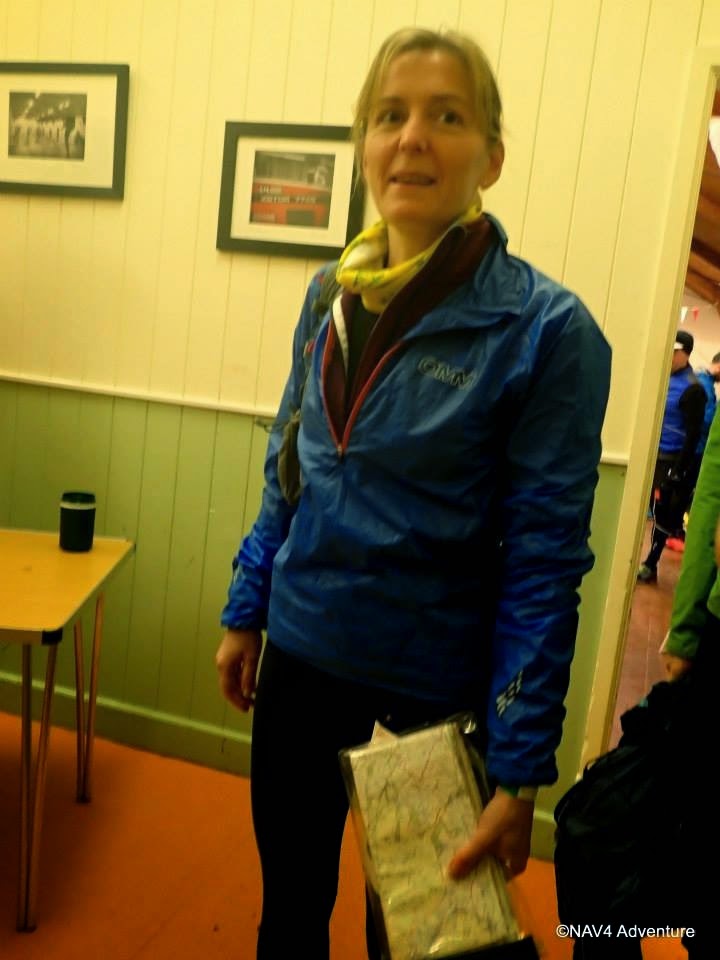
I thought I'd finish the second part of the blog first - the blow-by-blow commentary can wait a little while longer (besides I need to get the photos sorted), but this was always going to be a learning experience and the more interesting and important stuff is really the review of the race.
What went well
General approach / plan
Reading people's blogs from previous years, it's clear that most drop outs, even if they actually happen later in the race, can be tracked back to serious mistakes on day 1 or day 2. If you get past halfway in good order you're going to be pretty unlucky (or have to do something really dumb) not to finish.
My race strategy was therefore to take it steady and protect myself as much as possible until the very last stage (by that I mean the mountains after Byrness) where I would let myself race unless conditions or my condition meant that wasn't possible. So I planned to sleep and eat plenty and to "run" really within myself. Most importantly, I wouldn't worry about being near the back or about what anyone else was doing, I'd just concentrate on the factors I could control. In general this worked well - I noticed that I was stopping to brew up and eat quite a bit more than many of the other racers, but this meant I could maintain a decent pace when I was moving and keep warm more easily.
But the key thing about your strategy is how you deal with the mental aspect of the race. I was very determined and organised about this and it really paid dividends. First, you have to understand very clearly why you are doing the Spine race and what you want to get out of it. Be disciplined with this and make it an aim which is always positive. Process related goals are best (i.e. ones which are about how you do the race rather than about end result). This stops you thinking about how unbelieveably bloody far it is to the finish, and replaces that with something useful as you are actually in the process of slogging your way north.
For me, I just love being out in the wild. Lots of overnight runs and events, often alone, have left me comfortable navigating and moving on rough ground at night and more able to focus on where I am and how fortune I am to be there. I decided that whenever it got tough I'd think about how much better it would be to be wherever I was than to be sitting in the office at work!
I had a rough time for a while when I was very tired and conditions weren't great after Great Shunner Fell. I worked it out in the end just after Keld, got myself back in my happy place and realised I was going to be ok. The four hours or so this took were pretty raw and emotional, but I was ready for that too and I came out of it much stronger. I started to realise that all I had to do was keep going (over and above the basics of keeping warm, on track and safe which by this point most racers will have "got"). In my head I knew from here on that I would finish, it wasn't negotiable, the only way I was stopping was if someone from the event tapped me on the shoulder and told me either I was out of time or I was too injured to continue.
Luck can seem to come into the Spine a lot of the time. We had a couple of weather holds which were "lucky" (no, they weren't - conditions were really too bad for folks to be moving about in any safety on the hills and getting a break because conditions had got that bad wasn't lucky because we'd already been through some very testing weather as it deteriorated). Was I "lucky" to be able to stop at Lothersdale pub to get dry? No, I'd checked opening hours and spoken to the landlord to see if he would be doing food all day. Was I lucky to get going again after the bad spell in Swaledale? No, I worked through what was happening (really tired, cold, moving very slowly) and eventually did something about it (I stopped and ate a lot of sugary snacks followed by a proper hot meal and lots of caffeine). In the end the only real luck I had was meeting Burts on the Ladybank road midway between the wall and Bellingham when I was in another low spot, but even then I'd already mentally solved the problem by deciding I was going to find some shelter by the road and stop and cook some food. It was just nice to have someone else to chat to and do the cooking!
On the Spine, you make your own luck, and you do that by having the right skills and experience, the right gear, and the right attitude.
One more thing! I'm a keen Blogger and do Facebook a lot too. But not on the Spine. Whilst it was amazing to know people would be tracking and posting supportive messages and so on, I decided to take Joe Faulkner's advice and not let myself be distracted by any of that. Sometimes good wishes from home and friends can just make you want to be back there and I didn't want to risk it. I took a cheapo PAYG phone purely for comms with the race team and Zoe. I only messaged Zoe once, from Middleton, to say it was going ok, until I saw her on Friday morning near the A69. Otherwise I just stayed in my own moment. That was a really great piece of advice and something I'll do again. It's hard enough to keep your head in the right place with the distractions the race will put in front of you without adding a load more.
Feet and foot care
I'd listened carefully at the training weekend and spent a lot of time in November and December sorting out what to do. In brief, I went with a two layer sock solution, wearing a thin coolmax liner sock and a variety of thicker wool outer socks to suit the conditions, my footwear, and the size of my feet. I tried this out on the two longer reccies I managed and so I knew what worked over 50 miles of bog and slabs and was able just to buy more of it. I also tried drymax socks in various types which have worked well for others but were a dead loss for me. I wore a set of cloth gaiters almost throughout and they kept almost all the grit and vegetation out of my shoes. All I had in my socks at the end of each leg was a large dose of silt. I changed from racing shoes to more comfortable shoes in a half size larger at Hawes. I'd tried both first...
In addition to getting the socks and shoes sussed, I got the foot care spot on - at every checkpoint I took everything off and washed my feet as best as I could (I had wet wipes in the drop bag but generally was able to use a sink or bowl of hot water and a luxury hot shower at Middleton). I then talc'ed each foot up and put the liner socks for the next stage on whilst I slept. Result was no trench foot and no blisters whatsoever. That's right, no blisters.
Kit / clothing
I had my kit pretty sussed out by the time I started and only had two major mistakes with equipment - but I got enough of it right that I could deal with both of them.
Your kit has to:
- Keep you warm - primarily warm enough to stay alive, but ideally warm enough to function well, make reasonable forward progress and be able to make decisions;
- Keep you comfortable - it's all relative, but I mean this in the sense that it's obviously easier to progress forwards if you don't lose large amounts of skin from contact points or get muscle cramps or back pain or whatever;
- Give you flexibility - you need to be able to "tune" your clothing and your strategy to suit the conditions and your state.
Ideally your kit needs to be as light as possible while its doing fulfilling these functions. When considering weight, I'd disregard the weight of what you will normally be wearing or carrying in you hands - it makes little difference whether your cag is 250g or 450g. Weight on your back does make a lot of difference to the comfort and speed you can move.
My full kit list with reasons will be in another post - I'll only listed the things I actually used or carried and I guess 60% of what was in my drop bag never got used.
The two things I'm going focus on here are your clothing and your carrying system. These make the most difference while you're actually moving. I didn't really test my sleep system in the race as my only bivvy away from a checkpoint was effectively under cover, in the ladies loos at Malham.
Clothing wise, I went for a wicking base layer (ideally crew neck and long sleeved) with a powerstretch (i.e. closely fitting) mid layer on top. I wore synthetic briefs (I don't like boxers!) and winter weight running tights on my legs. On top of that I had my waterproof shell which I wore all the time on this race. In my bag I had a Primaloft top which I ended up wearing most of the time. Most critically I had several means of micro adjusting my temperature - three weights of hand wear and three different hats (the most I wore together was two of each). I wore a buff from a local race organised by my best ultra-running mates throughout - every time I looked at it I had a little lift remembering the crack we've had. The knack in UK cold conditions is not to break a sweat - keep your base and mid layers reasonably dry and they will keep you warm and happy - so I concentrated a lot on moderating my pace on the climbs and adding buffs, hats, and thicker gloves on any slow flat or downhill sections to keep warm.
 |
| Sorting feet at Hawes. Almost full race kit still on - thermal, powerstretch mid-layer, primaloft and shell. |
In my pack I carried a dry set of base layer (heavy-ish weight thermal top and longjohns) in case I took a dunking and needed to get my skin dry quickly, a spare fleece (used on the colder sections later in the race when I was feeling it) and spare socks. Everything in my pack was sorted into a variety of dry bags - different sizes and colours.
I started out intending to use my OMM 30L Classic mountain marathon pack, and both my longer reccies were done with this and a small front pack. I had everything sussed - everything had a place, it was all accessible when I wanted it and I knew where everything was - but I was getting a lot of pain in my shoulders and my lower back. The Spine load is heavier even than a solo mountain marathon load, the stages are twice or three times as long as a big MM day, and you're going out five, six, or seven days in a row, not two. In the end I just don't think the OMM worked for me for this event, so I switched approach.
After the second reccie I popped across to Kendal for a chat with Charlie Sproson, and came away with an Aarn pack. This has big pockets on the front which help balance the load so it pulls back less on your shoulders, and a great system of straps which works like a series of ropes and pullies to keep the load much more stable as you move your upper body around. I bought the pack there and then and, because I'd run out of reccie time, I did the Tour de Helvellyn race on the last Saturday before Christmas with (almost) full Spine kit in the new pack. This gave me the chance to suss out where to put everything and spend a reasonably long day adjusting and grooving the system and getting used to the pack.
My only problem with it during the event was an uncomfortable few hours from Bellingham to Byness after a marshal picked the sack up by the back adjuster strap, unbeknown to me, and managed to throw the adjustment right off. I didn't know what was wrong with it until I stopped at Byrness and had a good fiddle around. The same guy also took my mitts to somewhere unknown to dry them at Byrness, even though I didn't want them moved, and then wasn't around to show me where they were when I wanted to leave so I ended up racing around trying to borrow some. Anyway, apart from 8 hours on the last day, I had no back or shoulder problems at all during the event.
What went less well
Sleep / CP Strategy
The strategy was to sleep as follows:
Support
Predominantly I did the race unsupported, which was absolutely the right way to go. My partner came up to Northumberland and was able to offer limited support from just before Greenhead to Byrness. It was great to see her at Lambley briefly and helpful to meet at a couple of places along the wall just after I'd had problems with my right knee. The weather was really foul on the wall and it was nice to be able to jump into a warm car for ten minutes and be fed soup. She was also able to bring me a cheap pair of waterproof gaiters when I needed them (see below).
But the problem with support is that you quickly become dependent on it, and the final time I nearly came off the rails was on the crossing from the Wall to Bellingham, when Zoe had to text me to let me know she couldn't make it to Ladybank. I felt crestfallen and defeated until I pulled myself together. In the end I decided I'd make a drink and a dehyd meal up when I got to the road. Andrew Burton saved me the effort, coming to the rescue as he'd been out to support Joe and Mark and not yet moved on.
I think the importance of staying on an even keel mentally / emotionally probably outweighs the physical advantages of support on this event, for me at least. For a more easily / reliably supportable event (better weather, better roads, more predicatable timings) I would consider running supported, but not for a future Spine run.
Kit mistakes
Both my fault, not the kit!
I bought an eVent jacket specifically for the Spine. It's a brilliant piece of kit - light, very very breathable, equally waterproof fully adjustable hood, etc. The only drawback is the storm flap behind the zip which isn't wide enough and gets caught in the zip on a frequent basis, and the fact that it stopped being waterproof in a massive rain/sleet storm as we crossed Ickornshaw Moor on day two. I'd done two 18hr+ reccie trips, Tour de Helvellyn and a few other days out in it since buying it. I'd covered it in mud and sweated a few buckets into it towards the end of T de H. Not to mention the first 30 hours of the Spine itself which were pretty demanding conditions. Basically I'd filled the pores in the membrane and worn the DWR away, so the jacket was wetting out and not breathing well anyway.
I was "lucky" with this one. It helped that I was wearing the right stuff underneath so I was (just about) warm enough even when everything got soaked. It also helped that we got to Lothersdale in improving conditions and I was able to dry all my kit in the pub. We bivvied at Malham as the weather was turning really foul on the second night and had a free 40 minute stop at CP1A at Malham Tarn early on the third morning after a soaking coming up from the village so again I could get everything dried off. After intermittent but driving rain up Fountains Fell, day 3 turned into a fairly nice day (apart form the immensely strong wind), so I could make it to Hawes and my drop bag, and switch to my back-up cag. The lesson is that nothing, save possibly Paramo, stays waterproof for long in the conditions we find ourselves racing in, so you need to (carefully) wash and re-proof your waterproofs regularly and definitely before any major events.
I wore the wrong gaiters on the high crossing from Middleton to Alston. We started just after a fresh dump of snow and it was incredibly windy and very cold up at Cow Green. Cloth gaiters are fabulous at keeping grit and other debris out of your shoes but very very rubbish when the are wet and then freeze solid. Shortly after that the (over-ample) tongues on my Speedcross shoes also froze solid, banging into the front of my ankles every time I took a step. The result was that I was in pain and slowed by that and by having to stop to try to break up the ice a bit every few hundred yards.
You will make more mistakes towards the end as you get tired. I dropped a glove and my balaclava, and I forgot to put my waterproof gaiters on for the final leg over the mountains despite Zoe's effort in getting them. The knack is to make few enough mistakes early on when your brain is still working well that the ones you make later don't matter so much.
The strategy was to sleep as follows:
- tent outside CP1 at Hebden Hay;
- tent again somewhere around Horton;
- one of the shelters between the A66 and Middleton, or in the CP at Middleton;
- in the CPs at Alston and Bellingham
This was a pretty flawed strategy in hindsight. The late start and the very poor weather on the first leg meant it was after 5am when I got to Hebden. I was too tired and cold to want to sleep outside: I found a bed in a dorm but it was very noisy and I probably only managed 30 mins sleep in a 2 hour lie-down. The weather and underfoot conditions on the second leg were tough again and it was 2:30am when we got to Malham Village in rapidly deteriorating weather. We'd been told that the mid-way CP at Malham Tarn would just be a single room so we decided to try to sleep at Malham. Good result, I managed 2½ hours' decent sleep in the ladies' loos with the Germans while Stephen and Iain had a reasonable if smelly kip next door in the gents.
I really cocked up at Hawes later in the day, I stopped for six hours and managed maybe an hour of sleep. The CP was a large single room and there was a lot of noise. I should have sorted myself out, eaten, and headed out to bivvy in Swaledale somewhere. Middleton was fine, plenty of dorms which were quiet, it was just a shame I got woken up a couple of times to be consulted about getting a group together for the next leg. Because of the extended weather hold we all got loads of sleep at Alston, although I had some sleep in the bank from Middleton and would probably have gone straight through and on to Greenhead if we hadn't had the hold.
I slept well at Bellingham by avoiding the large hall and crashing on a sofa in the staff room - thanks for putting up with the stench and the snoring guys. I even managed to sleep with my feet right up which probably was the difference later on when I had to cram them back in my shoes. I intended to get 45 minutes sleep at Byrness but I was the last runner there (although several hours ahead of some who were in front of me from the restart due to our arrival times at Alston). I didn't want to delay the MST team deploying to sweep the course and I knew there were guys sat in the first mountain hut too who wouldn't be that comfortable so I had a decent rest and left in time to make it up to Byrness Hill at last light. Because I ate steadily all night and had proper meal and coffee stops at both huts I was easily able to keep going all the way to Kirk Yetholm.
Sleep summary:
- CP1: 30 mins
- Malham: 150 mins
- CP2: 60 mins
- CP3: 240 mins
- CP4: loads
- CP5: 120 mins
The weather stops didn't help me in terms of my time as I had banked sleep at Malham (four hours lost compared to those who were at the CP during the stop) and at Middleton (when I could have gone straight on to Alston if I'd known we were going to be held there - another four hours) but I wasn't in touch enough with forecasts to be able to second guess Stu Westfield's safety decisions - I doubt any racers were.
Next time I'd take a "do not disturb - wake me up at ____" sign for the checkpoints. I'd have a different and more flexible plan for sleeping, and I wouldn't sleep until Malham - I now know what to do when the sleep monsters strike and would be more prepared to take a small risk.
Predominantly I did the race unsupported, which was absolutely the right way to go. My partner came up to Northumberland and was able to offer limited support from just before Greenhead to Byrness. It was great to see her at Lambley briefly and helpful to meet at a couple of places along the wall just after I'd had problems with my right knee. The weather was really foul on the wall and it was nice to be able to jump into a warm car for ten minutes and be fed soup. She was also able to bring me a cheap pair of waterproof gaiters when I needed them (see below).
But the problem with support is that you quickly become dependent on it, and the final time I nearly came off the rails was on the crossing from the Wall to Bellingham, when Zoe had to text me to let me know she couldn't make it to Ladybank. I felt crestfallen and defeated until I pulled myself together. In the end I decided I'd make a drink and a dehyd meal up when I got to the road. Andrew Burton saved me the effort, coming to the rescue as he'd been out to support Joe and Mark and not yet moved on.
I think the importance of staying on an even keel mentally / emotionally probably outweighs the physical advantages of support on this event, for me at least. For a more easily / reliably supportable event (better weather, better roads, more predicatable timings) I would consider running supported, but not for a future Spine run.
Kit mistakes
Both my fault, not the kit!
I bought an eVent jacket specifically for the Spine. It's a brilliant piece of kit - light, very very breathable, equally waterproof fully adjustable hood, etc. The only drawback is the storm flap behind the zip which isn't wide enough and gets caught in the zip on a frequent basis, and the fact that it stopped being waterproof in a massive rain/sleet storm as we crossed Ickornshaw Moor on day two. I'd done two 18hr+ reccie trips, Tour de Helvellyn and a few other days out in it since buying it. I'd covered it in mud and sweated a few buckets into it towards the end of T de H. Not to mention the first 30 hours of the Spine itself which were pretty demanding conditions. Basically I'd filled the pores in the membrane and worn the DWR away, so the jacket was wetting out and not breathing well anyway.
I was "lucky" with this one. It helped that I was wearing the right stuff underneath so I was (just about) warm enough even when everything got soaked. It also helped that we got to Lothersdale in improving conditions and I was able to dry all my kit in the pub. We bivvied at Malham as the weather was turning really foul on the second night and had a free 40 minute stop at CP1A at Malham Tarn early on the third morning after a soaking coming up from the village so again I could get everything dried off. After intermittent but driving rain up Fountains Fell, day 3 turned into a fairly nice day (apart form the immensely strong wind), so I could make it to Hawes and my drop bag, and switch to my back-up cag. The lesson is that nothing, save possibly Paramo, stays waterproof for long in the conditions we find ourselves racing in, so you need to (carefully) wash and re-proof your waterproofs regularly and definitely before any major events.
I wore the wrong gaiters on the high crossing from Middleton to Alston. We started just after a fresh dump of snow and it was incredibly windy and very cold up at Cow Green. Cloth gaiters are fabulous at keeping grit and other debris out of your shoes but very very rubbish when the are wet and then freeze solid. Shortly after that the (over-ample) tongues on my Speedcross shoes also froze solid, banging into the front of my ankles every time I took a step. The result was that I was in pain and slowed by that and by having to stop to try to break up the ice a bit every few hundred yards.
You will make more mistakes towards the end as you get tired. I dropped a glove and my balaclava, and I forgot to put my waterproof gaiters on for the final leg over the mountains despite Zoe's effort in getting them. The knack is to make few enough mistakes early on when your brain is still working well that the ones you make later don't matter so much.
Groups
Generally being in groups didn't work very well for me. I walked in company three times. The first, from Lothersdale to Hardraw was very helpful. Stephen and Iain went at a sensible and steady pace. If one of us stopped we could easily jog for a few minutes to catch back up. Having read Allan Rumbles' excellent and throughtful blog on this I was wary of forming a permanent alliance, especially as John and Iain clearly already knew each other well, and three's a crowd too, right? But we were together for a tough 30 hours and we decided to leave Hawes together. I dropped a mitten near Hardraw and didn't notice for quarter of a mile, but I decided to go back for it (good decision). I thought I might catch them up over Great Shunner but I made a nav error at the fell gate and lost a few more minutes and that was that. I had a few minutes of feeling down when I realised I wouldn't catch them but Great Shunner in a snow storm at 2am was too magical a place to be down for long.
Having been very tired at Keld, I planned on a good sleep at Middleton but was woken twice to be advised of other people's plans for the next leg. I'd rather have got a good kip, thanks. But Carl did do a good job of pulling a decent group together to do what was clearly going to be a challenging leg to Alston. I was just pretty tired and I didn't want to go as fast as three of the guys. When we regrouped (which was obviously making the quicker guys cold) I twice offered to drop off the back of the group and make my own way. I was pushing too hard to keep up and not eating or drinking enough, and was very glad to see MST2's big Merc camper at the top of the Cow Green road. We all scrambled aboard and were given hot drinks. I said I wasn't going to go on with the group and to my surprise, two of the other five also wanted to wait a bit and recover before pushing on to Alston. Carl, Ben and Phillip went on after a 20 minute stop and Alan, Mike and I stayed for another hour, sleeping a little and drinking and eating (which was what I'd have been doing on the way up if we'd moved a minute a mile slower). So pushing for 10 miles had cost me probably the best part of an hour, and it was good that the MST truck was there otherwise I might have been in no fit state to continue by the time I got to Alston. As it was in the smaller group we all had our own troubles on the way over to Alston - Alan was just very tired having done Horton to Middleton in one push and then gone almost straight back out again, and Mike was struggling with very badly blistered feet which meant he couldn't go fast enough to keep his legs warm. We stopped at a farm at Garrigill for half an hour for mike to get warmed up. At a steadier pace though, we got there in the end all feeling pretty reasonable, and the group with Alan and Mike ended up being quite a positive one.
I had a nice couple of hours coming out of Bellingham with Joe and Mark - I know Joe quite well and felt very comfortable chatting away and Mark I've met before a few time and I think we find each other interesting, if very different! Again though I felt I was pushing a little more than I wanted to so I took a 15 minute rest when we met Zoe on the Gibshiel Road and felt better for it. I went on steadily for a bit and was caught by the Germans (Andreas and Michael) before the start of the Redesdale Forest section. Again we had a nice hour or so together, joking our way through the forest and even running some sections. Together these guys got me through to Bellingham in good spirits.
I travelled around 80 of the 255 miles in groups and the rest on my own. Groups made the time pass quickly, but I was less in the moment, and struggled a lot dealing with (my perception of) the group's needs - not really what I'd resolved to do in terms of not worrying about what others were doing.
My "best bits" were all on my own: the epic first night hailstorm on Blackstone Edge; Great Shunner Fell and the section from above Keld where I got myself sorted through to Middleton, and the final "run-in" over the Cheviot where my nav was spot on and I had an absolute ball yomping across the dark mountains, pausing at the huts for food and cameraderie, and passing maybe ten other racers on my glory leg, revelling in the realisation that the overall plan was coming together: not only was I going to make it, but I was going to do it in style, out on the fells where I feel most at home.
IF I do the Spine again, (and I probably will in time), it'll be as a solo effort, with no support - those were the bits where I enjoyed myself most, learned the most, and was most me.
Why did I finish?
I was reasonably well prepared, physically and in terms of my kit. I wasn't as fit as I wanted to be, but then who ever is, and as Allan Rumbles has pointed out, you get fitter as you go along on this race! My experience of mountaineering, hillwalking and above all mountain marathoning gave me most of the skill set I needed to look after myself. But above all, I had the right attitude. When it came down to it, I wanted to keep going. A lot. Not to finish, but because I was really, genuinely, enjoying myself. That meant I could hang in there when it was all going wrong, and come out of each difficulty actually feeling stronger and better equipped to keep going.
This race ultimately is about just that. It's not about finishing, or times, or hard running. It's about doing what you need to do to keep going. For me that was having the right attitude, and enjoying everything the race could throw at me.
I had the most awesome experience, for which I'd like to thank everyone who made it possible.
Postscript
Generally being in groups didn't work very well for me. I walked in company three times. The first, from Lothersdale to Hardraw was very helpful. Stephen and Iain went at a sensible and steady pace. If one of us stopped we could easily jog for a few minutes to catch back up. Having read Allan Rumbles' excellent and throughtful blog on this I was wary of forming a permanent alliance, especially as John and Iain clearly already knew each other well, and three's a crowd too, right? But we were together for a tough 30 hours and we decided to leave Hawes together. I dropped a mitten near Hardraw and didn't notice for quarter of a mile, but I decided to go back for it (good decision). I thought I might catch them up over Great Shunner but I made a nav error at the fell gate and lost a few more minutes and that was that. I had a few minutes of feeling down when I realised I wouldn't catch them but Great Shunner in a snow storm at 2am was too magical a place to be down for long.
 |
| A good group, working well - Iain, Stephen and me - all laughing despite having been racing for 52 hours already. Pic from Cam End © The extremely excellent Mick Kenyon of Racing Snakes - used with permission |
I had a nice couple of hours coming out of Bellingham with Joe and Mark - I know Joe quite well and felt very comfortable chatting away and Mark I've met before a few time and I think we find each other interesting, if very different! Again though I felt I was pushing a little more than I wanted to so I took a 15 minute rest when we met Zoe on the Gibshiel Road and felt better for it. I went on steadily for a bit and was caught by the Germans (Andreas and Michael) before the start of the Redesdale Forest section. Again we had a nice hour or so together, joking our way through the forest and even running some sections. Together these guys got me through to Bellingham in good spirits.
I travelled around 80 of the 255 miles in groups and the rest on my own. Groups made the time pass quickly, but I was less in the moment, and struggled a lot dealing with (my perception of) the group's needs - not really what I'd resolved to do in terms of not worrying about what others were doing.
My "best bits" were all on my own: the epic first night hailstorm on Blackstone Edge; Great Shunner Fell and the section from above Keld where I got myself sorted through to Middleton, and the final "run-in" over the Cheviot where my nav was spot on and I had an absolute ball yomping across the dark mountains, pausing at the huts for food and cameraderie, and passing maybe ten other racers on my glory leg, revelling in the realisation that the overall plan was coming together: not only was I going to make it, but I was going to do it in style, out on the fells where I feel most at home.
IF I do the Spine again, (and I probably will in time), it'll be as a solo effort, with no support - those were the bits where I enjoyed myself most, learned the most, and was most me.
Why did I finish?
I was reasonably well prepared, physically and in terms of my kit. I wasn't as fit as I wanted to be, but then who ever is, and as Allan Rumbles has pointed out, you get fitter as you go along on this race! My experience of mountaineering, hillwalking and above all mountain marathoning gave me most of the skill set I needed to look after myself. But above all, I had the right attitude. When it came down to it, I wanted to keep going. A lot. Not to finish, but because I was really, genuinely, enjoying myself. That meant I could hang in there when it was all going wrong, and come out of each difficulty actually feeling stronger and better equipped to keep going.
This race ultimately is about just that. It's not about finishing, or times, or hard running. It's about doing what you need to do to keep going. For me that was having the right attitude, and enjoying everything the race could throw at me.
I had the most awesome experience, for which I'd like to thank everyone who made it possible.
Postscript
I'd thought about the race right up to the point of finishing. I never really gave much of a thought to what happens afterwards. It's changed some folk's lives, I know that for talking to them. For me though, I feel a little calmer and a little clearer about what's important to me. The time in the hills was what I treasured the most from the race. Future decisions will be shaped towards making sure I can enjoy more of that and share it with Zoe too. I will have some memories of some amazing moments: the feeling I had sat on the summit rocks of Schill 6 miles from the finish at 3:30am, just being still, on my own in that immense landscape, enjoying the moment, will live with me for ever - I'm almost welling up thinking about it.
The physical aftermath is pretty much as I expected - swollen feet and ankles that took three weeks to go down, a deep physical tiredness that has only just passed, and reduced strength and flexibility which I should have copped earlier but which has caused a few niggles and now a minor calf pull.
Mentally I was totally unprepared for three weeks of my subconscious trying to sort out what I'd just put myself through. Waking up two or three times every night from endless Spine racing dreams with something having suddenly gone badly wrong? What was that all about - I'd finished the thing hadn't I? Maybe just the stress and tension I felt during the event dissipating?? I don't know really, and the dreams have stopped now. Emotionally I might be a little more in touch with myself, but much stronger too. I'm starting to refocus into the present and the future, starting to be able to look towards the next big events that life might bring...